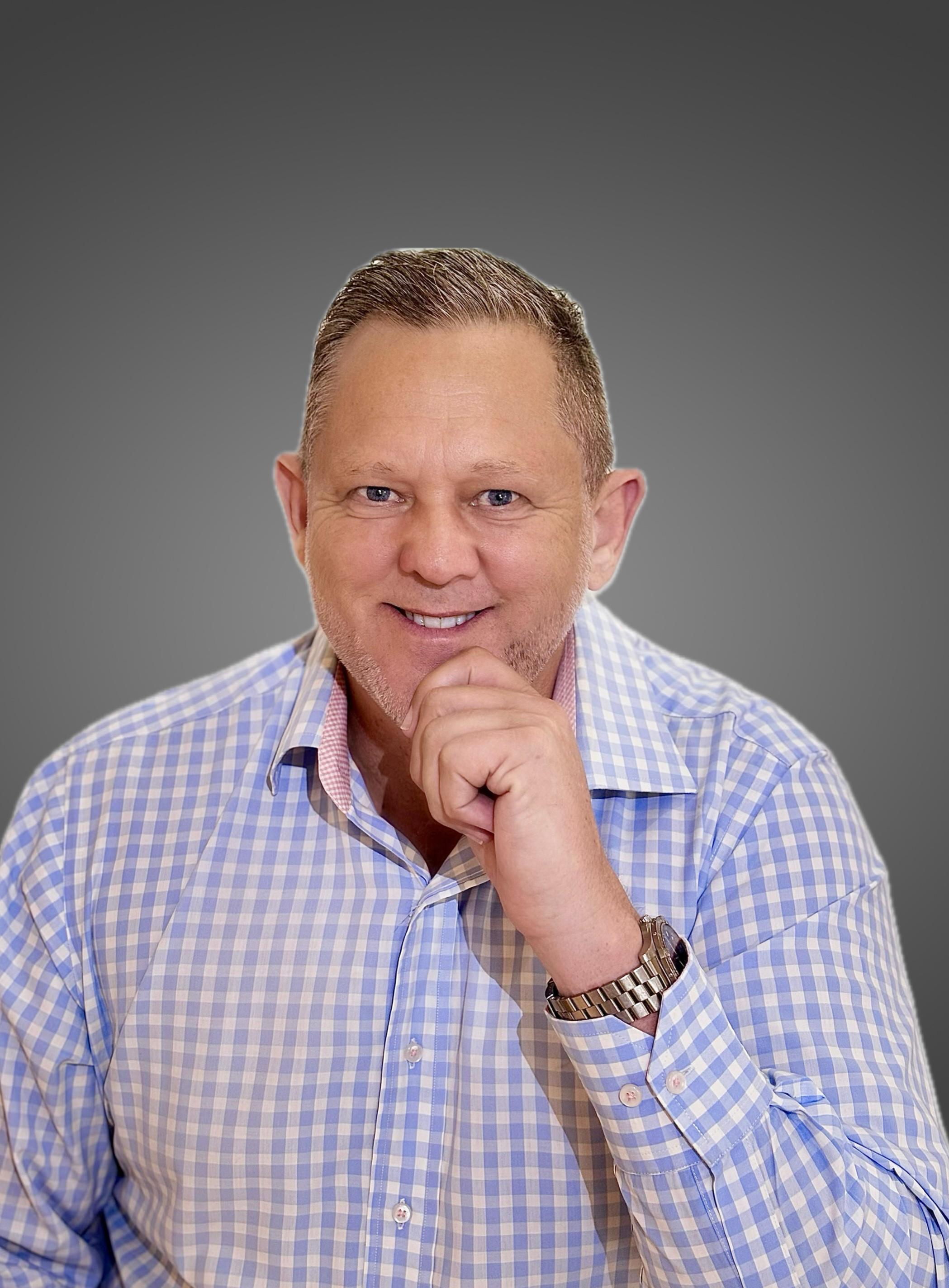
The person behind the practice
I've spent three decades building technology businesses and fixing difficult systems. These days I mostly help organisations avoid expensive mistakes.
I started in technology in the mid-nineties when systems integration in South Africa was still being defined. The first decade was spent learning the craft.
In 2001 and again in 2005 I co-founded two systems integrators. Integr8 IT and later THINK iT Solutions, both of which were acquired. We built them from the ground up: architecture, delivery capability, vendor relationships, and culture. We were young, hungry, and loved the work. Everyone eventually moved on, but the good memories and a fair number of tequila stories remain. I served as CTO through the later acquisition and integration and later built and led national infrastructure and platform practices within a JSE-listed technology group.
The engagement that defined that period began as a storage conversation. It revealed an organisation that hadn't invested in its technology infrastructure for over a decade, mid-way through an ERP implementation on a foundation that couldn't support it. We architected and delivered a complete environment refresh across three distinct business units: data centre, compute, storage, network, virtualisation, telephony, backup and DR. A multi-million pound engagement that displaced an entrenched global incumbent. One of the largest mid-market technology deals of its kind at the time. The lesson it confirmed: the right conversation, early enough, changes everything.
At one point I became an Aussie for 8-years. I later realised the problem with Australia was that there were simply too many Australians.
In Western Australia I led regional operations for a systems integrator serving mid-market and public sector clients. Within the first year I was promoted to State Manager. During that period I secured approximately AUD 4M in public sector contracts, delivering for the Department of Health, Department of Mines, Southern Ports, and Horizon Power. What Australia added was rigour. A procurement environment where vague proposals don't survive and accountability is structural.
What I took from all of it is a clear understanding of how technology decisions get made inside organisations, and how often the process is less reliable than it appears from the outside. Vendors are confident. Internal teams are capable. Yet organisations still commit to directions that don't serve them well. Not because anyone is dishonest, but because no single person in the room has both the technical depth and the independence to say plainly what is true. For most of my career I was part of exactly those decisions: platform selection, vendor engagement, architectural direction, and organisational change, carrying accountability for the outcomes, not just the recommendations.
Eventually I stepped away from the delivery chain to focus on independent advisory. Partly because I realised that in top heavy organisations competence often creates friction, leaving some people uncomfortable, and where mediocrity becomes culture. A structure that rewards for not rocking the boat. Working independently allows me to be genuinely useful to the organisations I advise, without the structural constraints that come with being part of the implementation machine.
The technology vendor market has changed significantly. Platforms are increasingly commoditised. Feature comparisons and benchmark reports no longer tell you what you actually need to know. What matters is the outcome, and whether the person advising you has a stake in which direction you go. Most do. I don't.
Today I work with organisations of 250–500 people where technology decisions carry operational and commercial consequence. This is where the work is most useful, and where the conversations are most honest.
Outside of work I'm a dual South African and Australian citizen, fluent in English and Afrikaans. I am based in Cape Town and work across South Africa.
When it makes sense to call me
The organisations that contact me are usually functional. The team is capable, the systems are running, and things are broadly moving in the right direction.
What's changed is that a decision is approaching, or already overdue, and nobody in the room is fully confident they're seeing it clearly.
Common situations include:
- A significant vendor proposal is on the table, ERP, infrastructure, cloud, data platform, and something about it doesn't quite add up, but you can't pinpoint what.
- You're receiving conflicting advice from people who all sound credible, and you have no independent way to evaluate who's right.
- Your IT leadership has changed, left, or become a single point of dependency, and decisions are now passing through one person or one vendor without a second perspective.
- A platform migration, modernisation, or scaling initiative is underway and the risk feels higher than it should for what's being attempted.
- You're acquiring a business or being acquired, and the technology environment of the target is unclear or hasn't been assessed independently.
- You're being asked to approve significant spend on technology and you're not confident you understand what you're actually buying.
These situations have a common thread: the organisation has capable people, but the decision in front of it requires an independent perspective that isn't tied to any particular outcome.
The most consequential engagements often begin with a single question. A storage conversation that revealed an organisation unprepared for the ERP it was implementing became a complete infrastructure transformation across three business units. At the same time displacing a global incumbent that had held the account for years. A multi-million pound engagement, delivered end-to-end. Client references and specific engagement outcomes are available under NDA.
That's where I come in.
What exactly do you do?
I work with organisations before a significant technology decision is made, establishing a clear picture of the environment. The real risks, and what the decision actually involves. The aim is to give leadership a reliable basis for the call they need to make.
How is this different from a consultant?
Most advisory engagements are attached to a deliverable such as a report, a recommendation, a project plan. What I do is closer to temporary technical leadership: working alongside the organisation, not producing something for it. The focus is on shared understanding rather than a document.
Do you replace our IT team or existing incumbents?
No. I work alongside whoever is already involved. In most cases the internal team is capable, the value of an outside perspective is that it's independent of the internal dynamics and existing relationships, not that it replaces them.
You have a background in systems integration. Do you still have vendor relationships?
No. I stepped away from implementation and integration work specifically to operate without those obligations. I have no reseller agreements, vendor partnerships, or platform incentives. That independence is what makes the perspective useful. I have no stake in the decision going a particular way.
How long does an engagement take?
The discovery phase is typically four to six weeks. After that, some organisations continue with ongoing involvement, through a transition, a decision process, or a defined period of interim leadership. Others have what they need from the initial phase and continue independently. Either outcome is fine.
What does it cost?
The discovery phase is a fixed fee agreed before anything starts. Ongoing involvement is structured based on what's required. There are no ambiguous billing arrangements. You know what you're committing to upfront.
Do we need to prepare anything before making contact?
No. A short description of the situation. What's happening, what decision is approaching, is enough. If it sounds like something I can contribute to, I'll describe what involvement would look like. If not, I'll say so.
We're based in Johannesburg. Do you travel?
Yes. I work across South Africa. Most of the work can be done remotely, but I travel when being present is useful. For certain kinds of decisions, it is.
What does fractional CTO mean in practice?
It means you get someone who understands the technology and understands the business. Someone with enough experience to know when a proposal is genuinely sound and when the complexity is being manufactured to justify the cost. Not a part-time employee. Not a consultant producing a report. Someone sitting alongside your leadership when the decisions are being made.
Can you share examples of previous work?
Yes. The most significant engagement from the THINK iT years began as a storage conversation and became a complete infrastructure transformation across three business units, displacing an entrenched global incumbent. A multi-million pound mid-market deal, architected, sold, and delivered end-to-end, and one of the largest of its kind at the time. That engagement contributed directly to the acquisition of the business. Further references and specific outcomes are available under NDA for prospects who need to evaluate track record before proceeding.
Antonym Life South Africa (Pty) Ltd t/a 2am operates this website.
2am only processes personal information you voluntarily provide when contacting us, such as your name, email address and the content of your message.
This information is used solely to respond to your enquiry and to determine whether a professional discussion or engagement is appropriate.
2am does not sell or use personal information for advertising or marketing lists.
Information is not shared with third parties except where required by law and is kept only for reasonable professional record-keeping.
You may request access to, correction of, or deletion of your information by contacting the Information Officer:
legal@2am.africa
This website is provided by Antonym Life South Africa (Pty) Ltd t/a 2am for general informational purposes only.
The content describes the nature of the practice and does not constitute professional, technical, or legal advice.
Viewing this website or sending a message does not create a professional relationship, engagement, or obligation.
Any guidance or opinions expressed on the site are general in nature and may not apply to your specific circumstances.
Decisions should not be made solely based on website content without appropriate discussion.
2am is not responsible for any loss, disruption, or damage arising from reliance on information presented on this website.
A professional relationship exists only once a formal engagement has been agreed in writing.
Prepared in terms of Section 51 of the Promotion of Access to Information Act, 2000 (PAIA)
Private body
Antonym Life South Africa (Pty) Ltd t/a 2am
Registration Number: 2017/108238/07
Purpose of this manual
This manual explains how a person may request access to records held by 2am in accordance with PAIA.
2am is an independent technical leadership practice and does not operate public platforms, user accounts, or consumer services.
The amount of personal information held is limited to professional correspondence and administrative records.
Records held
Records may include:
- business correspondence
- engagement agreements
- invoices and financial records
- administrative records required by law
2am does not maintain consumer databases, public user accounts, or marketing mailing lists.
How to request access
A request for access to records must be made in writing and must:
- describe the record requested
- provide sufficient detail to identify the requester
- include an email address for response
2am will respond within a reasonable period in accordance with PAIA.
Fees
If applicable, statutory request fees prescribed by PAIA may apply.
The requester will be informed before any fee is payable.
Grounds for refusal
Access may be refused where permitted by PAIA, including where disclosure would:
- reveal confidential commercial information
- violate the privacy of another person
- be legally privileged
- compromise security or legal proceedings
Availability
This manual is available on request from the Information Officer:
legal@2am.africa
This website uses only essential technical cookies required for normal operation and security.
2am does not use advertising trackers, behavioural profiling, or third-party analytics services.
No personally identifiable information is collected through cookies.
You may disable cookies in your browser settings.
Doing so may affect how the site displays but will not prevent you from contacting us.